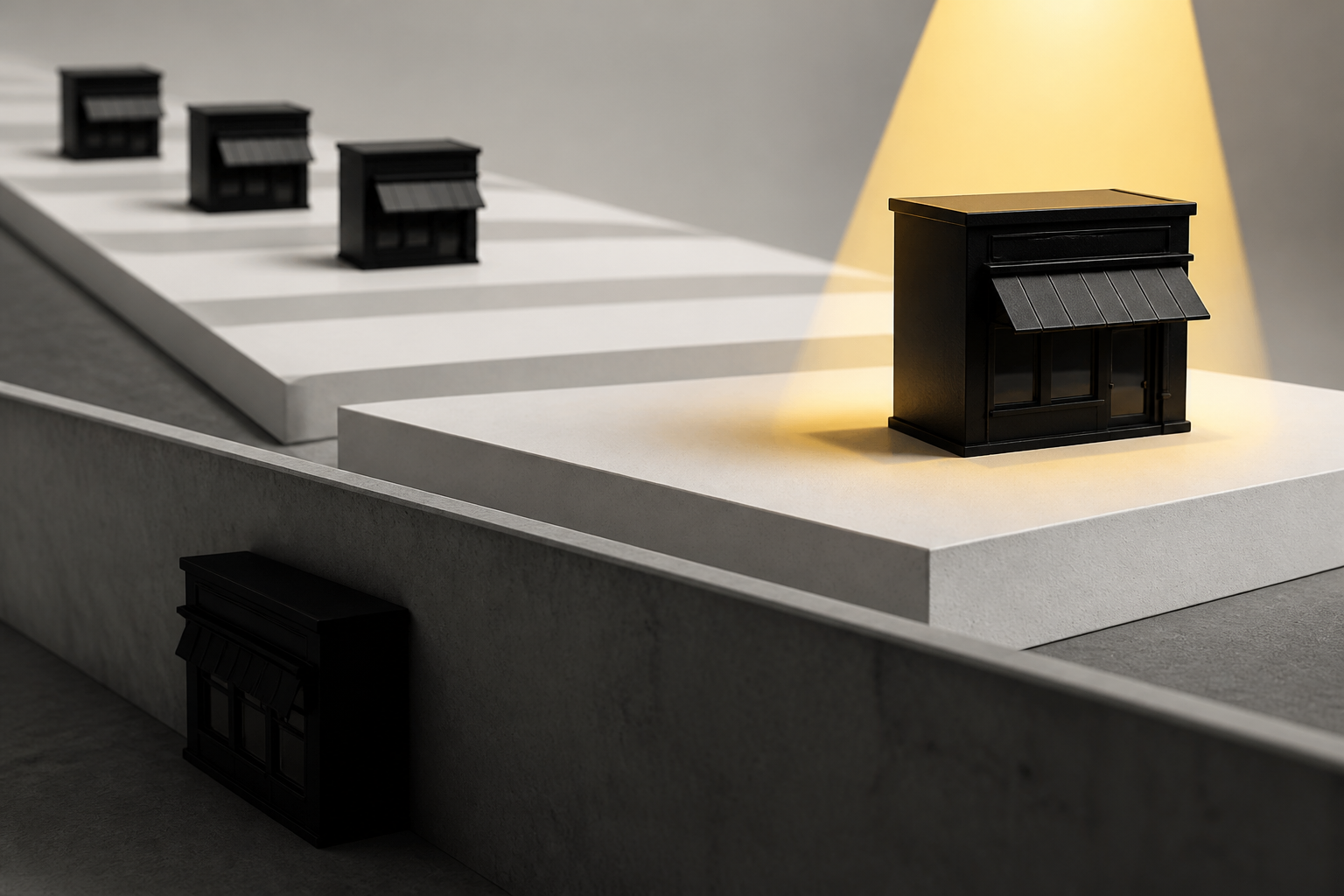
Imagine spending years building a beautiful storefront, perfect signage, a loyal following, thousands of dollars in renovations, on land you don’t own, with no lease, and a landlord who can evict you without notice or explanation. Most people would call that a terrible business decision.
Yet that’s exactly the arrangement thousands of businesses have with Instagram, TikTok, and Facebook. Every post, every follower, every ounce of brand equity lives on land owned entirely by someone else, and that someone else can take it away at any moment.
You Don’t Own Your Audience
This is the core issue: your followers don’t belong to you. They belong to the platform. You have permission to reach them, under the platform’s rules, for as long as the platform allows it. That permission can be revoked instantly, through an algorithm change that tanks your reach, a policy update that limits what you can post, or an account suspension triggered by something as arbitrary as an automated moderation error.
There is often no appeal process that actually works, no human to call, and no guarantee you’ll ever get your account, or your audience, back. Years of content, followers, and messages can disappear in an afternoon, and there’s very little you can do about it.
Real Businesses Have Lost Everything Overnight
This isn’t a hypothetical scare tactic. It happens regularly: accounts with tens of thousands of followers get suspended over a misunderstood flag, a copyright dispute, or a bug in the platform’s moderation system. Business owners wake up to find their entire digital presence, their main way of reaching customers, simply gone, with no clear path to recovery.
For a business that built its entire online identity on that one account, this isn’t an inconvenience. It’s closer to a business emergency.
Algorithm Changes Are Their Own Kind of Risk
Even without an outright suspension, platforms constantly adjust what content gets shown and to whom. A strategy that worked beautifully last year can quietly stop working this year, not because your content got worse, but because the platform changed the rules of visibility to favor something else (usually, paid ads).
You’re not just renting space. You’re renting space where the landlord can rearrange the entire building overnight, and you find out only by noticing your foot traffic disappeared.
A Website Is the Deed, Not the Lease
A website flips this entire dynamic. When you own a domain and hosting, that address is yours. No algorithm decides who gets to see it. No moderation team can suspend it over an automated error. No policy change quietly buries your posts. Barring you not paying your hosting bill, it’s yours indefinitely, on your terms.
That’s not to say a website is risk-free, nothing digital is. But the risks are ones you control: renewing your domain, choosing reliable hosting, keeping backups. Compare that to the risks of a social platform, which are entirely outside your control and often outside your visibility until it’s too late.
The Smart Move: Own the Foundation, Rent the Traffic
None of this means abandoning social media, it remains one of the best tools for reaching new audiences and staying visible in daily conversation. The shift in thinking is simply about sequence and priority:
- Treat your website as the foundation, the thing you own, that represents your business permanently.
- Treat social platforms as rented advertising space, useful, high-traffic, but never something your entire business depends on.
- Always be driving traffic from rented space to owned space, turning followers into email subscribers, website visitors, and direct customers whenever possible.
This way, if a platform disappears, changes its rules, or shuts down your account tomorrow, your business doesn’t disappear with it. You lose a marketing channel, not your entire audience.
The Bottom Line
Building an entire business presence on a platform you don’t own is a bet that the landlord will always play fair. Sometimes that bet pays off for years. But when it doesn’t, it doesn’t just cost you a bad month, it can cost you your entire digital identity overnight, with no warning and no recourse.
A website is the one piece of digital real estate that’s actually, permanently yours. Everything else is a rental, useful, but never something your business’s survival should depend on.