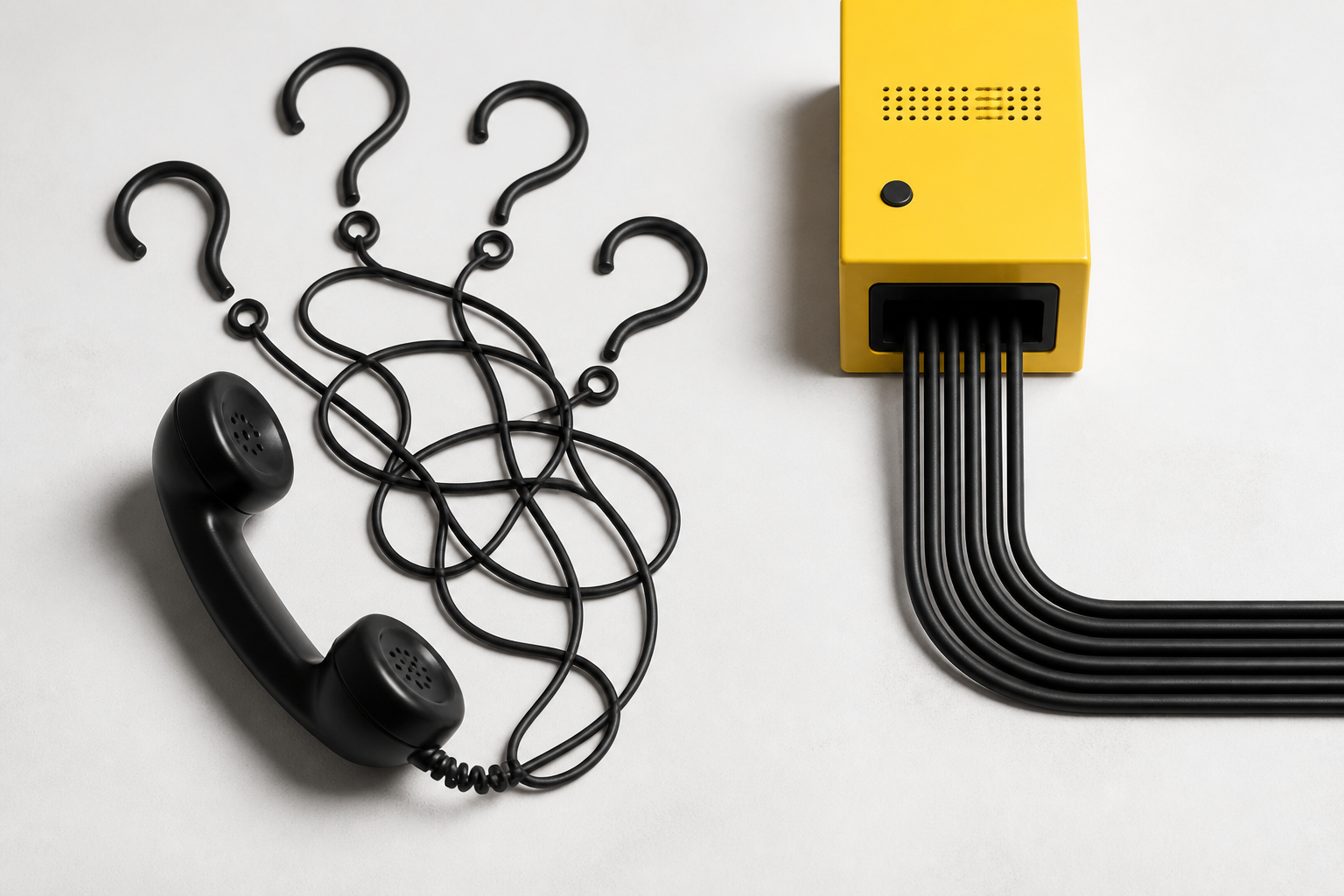
“What are your hours?” “Do you take walk-ins?” “How much does that cost?” “Do you offer delivery?” “Where are you located?”
If you run a business, you could probably recite your own version of this list without thinking. And if you’re honest, answering it for the hundredth time this month is starting to feel less like customer service and more like a part-time job you never signed up for.
Here’s the thing: those questions aren’t annoying because customers are being unreasonable. They’re annoying because the answers should already be easy to find, and right now, you’re the only place they exist.
Every Repeated Question Is Time You Don’t Get Back
Think about how much of your day gets absorbed by messages and calls asking things you’ve already answered a thousand times. Five minutes here, ten minutes there, it doesn’t feel like much in the moment, but multiplied across a week, a month, a year, it adds up to hours of your life spent repeating the same handful of sentences.
That’s time not spent serving the customer in front of you, refining your craft, or simply going home on time. It’s not that these questions don’t deserve answers, it’s that they don’t deserve your personal, repeated attention every single time.
A Website Answers Once, Forever
This is the quiet magic of a well-built website: you write the answer one time, and it works for every customer, forever, without you lifting a finger again. Hours, location, pricing, services, policies, all of it sitting in a clear, easy-to-find place, doing the explaining so you don’t have to.
A good FAQ page in particular can single-handedly eliminate the majority of repetitive questions. Every question you’re tired of answering by phone is a candidate for a permanent home on your website.
It’s Not Just About Saving Time: It’s About Better Customers
There’s a secondary benefit here that’s easy to miss: customers who’ve already read your FAQ, pricing, and service details before contacting you tend to be better customers. They arrive with realistic expectations, fewer surprises, and questions that are actually specific to their situation rather than basic information they could have found themselves.
That means the conversations you do have become more valuable, less “let me explain the basics,” more “let’s talk about your specific project.”
What Belongs on This Page
If you’re building this out, start by genuinely tracking the questions you get asked over the next two weeks. Almost every business finds the same handful of questions dominate 80% of their inquiries. Common candidates include:
- Hours and availability, including holiday exceptions
- Pricing ranges, even a rough range reduces a huge share of inquiries
- Service area or delivery options
- Booking and cancellation policies
- What to expect during the first appointment or interaction
- Payment methods accepted
Answer each one clearly, in plain language, without jargon. If a question needs a nuanced answer (“it depends on the project”), say that too, but give enough context that most people can self-serve the basics.
This Frees You Up to Focus on What Actually Matters
The goal isn’t to make your business feel impersonal or automated. It’s the opposite, by letting your website handle the repetitive, predictable questions, the time you do spend talking with customers can go entirely toward the things that actually require a human: understanding their specific needs, building rapport, and closing the sale.
The Bottom Line
Every business has its own version of “the same five questions,” and every hour spent re-answering them is an hour not spent growing the business or living your life outside of it. A website doesn’t replace the personal touch that makes your business special, it protects it, by clearing away the repetitive noise so your actual conversations can matter more.
If you find yourself dreading the phone ringing because you already know what’s coming, that’s not a customer service problem. That’s a website problem, and it has a straightforward fix.